Credit card surcharge ban in Australia: what it means for prices and card fees
Updated November 2, 2026 · 3 min read
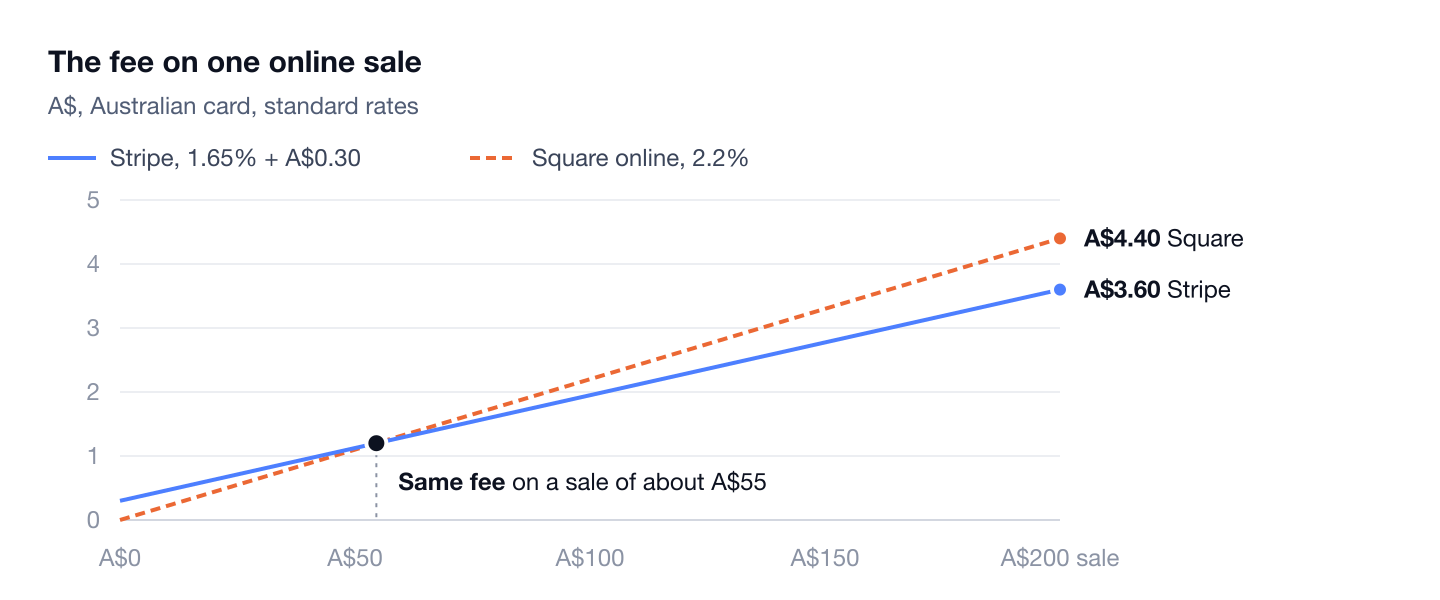
Australia’s credit card surcharge ban started on 1 October 2026: businesses can no longer add a surcharge to eftpos, Mastercard, Visa or American Express payments, so the card fee now comes out of your price. Online, Stripe’s standard rate is 1.65% + A$0.30 for an Australian card and Square’s is a flat 2.2%, which makes Square cheaper for sales under about A$55 and Stripe cheaper above that. Afterpay through Square costs 6% + 30¢ plus GST, more than three times either card rate.

What changed on 1 October
The Reserve Bank’s final decision, published on 31 March 2026, removed surcharging on debit, prepaid and credit cards on the eftpos, Mastercard and Visa networks and lowered the caps on interchange fees for domestic cards, both from 1 October 2026. A cap on overseas cards follows on 1 April 2027. The RBA expects small businesses to “benefit the most”, because they tend to pay fees closer to the old caps.
The government’s notice on business.gov.au also lists American Express. Weekend and public holiday surcharges, booking fees and service fees are not affected.
What the ban means for prices
The price on the shelf is now the price customers pay. “When card surcharging ends, the sticker price will be the price that consumers end up paying,” the RBA says in its summary of the decision. Businesses that used to surcharge may lift their prices a little to cover card costs, so customers there pay about the same as before, just inside the price. The lower interchange caps should cut card costs most for small businesses, which usually pay the highest rates.
For a single sale the amounts are small. On a A$5 coffee, Square’s 1.6% in-person rate is 8 cents. Across a year they add up: A$200,000 of card sales at 1.6% is A$3,200.
The standard rates, side by side
| Provider | Online, Australian card | Online, overseas card | In person | Monthly fee |
|---|---|---|---|---|
| Stripe | 1.65% + A$0.30 | 3.5% + A$0.30, plus 2% if the currency is converted | Not covered here | None on standard pricing |
| Square | 2.2% | Not listed separately | 1.6% | A$0 on Free; Plus from A$40 |
| Afterpay, through Square | 6% + 30¢ a sale, excluding GST | – | – | None |
Standard rates on Stripe’s and Square’s Australian pricing pages, October 2026. Square’s 1.6% in-person rate applies to accounts opened from 30 May 2024; older accounts pay 1.9% on Square hardware.
Where the two lines cross
Stripe’s fixed 30¢ makes small sales relatively expensive; Square’s flat percentage has no fixed part. The two cost the same on a sale of about A$55.
What a month of sales costs
| 60 online sales of A$150 (A$9,000) | Fees for the month | Share of sales |
|---|---|---|
| Stripe | A$166.50 | 1.85% |
| Square online | A$198.00 | 2.2% |
| Afterpay through Square, including GST | A$613.80 | 6.82% |
Example figures. Put in your own number of sales and average sale.
Which is cheaper for you
- Mostly small online sales, under about A$55: Square’s 2.2%.
- Larger online sales: Stripe’s 1.65% + A$0.30.
- A shop counter: Square’s 1.6% in person.
- Many overseas customers: Stripe’s rate rises to 3.5% + A$0.30, plus 2% if the currency is converted, so compare on your own mix of cards.
- Afterpay: worth switching on only where it brings sales you wouldn’t otherwise make, because its fee comes out of your price too.
Pricing the fee in
business.gov.au suggests these steps:
- Work out how much card payments currently cost you.
- Review your prices with that cost built in.
- Check that terminals, booking apps and online checkouts no longer add a surcharge automatically.
- Update the prices and payment information customers see.
- Talk to your payment provider, and compare others.
Sources
- Reserve Bank of Australia: Review of Merchant Card Payment Costs and Surcharging, Conclusions Paper (March 2026)
- Reserve Bank of Australia: Non-technical summary of the conclusions (March 2026)
- business.gov.au: Card payment surcharge changes (October 2026)
- Stripe: Pricing, Australia
- Square: Pricing, Australia
Rates were checked on 28 October 2026 and can change. General information, not financial advice.
Built well. Costs less. Backed by real engineers.
AI builds your software; engineers check the work and look after it once it's live.